auther: abinng date: 2026-03-18 19:52
createDate:2026-03-18 19:51
主要逻辑
Qt
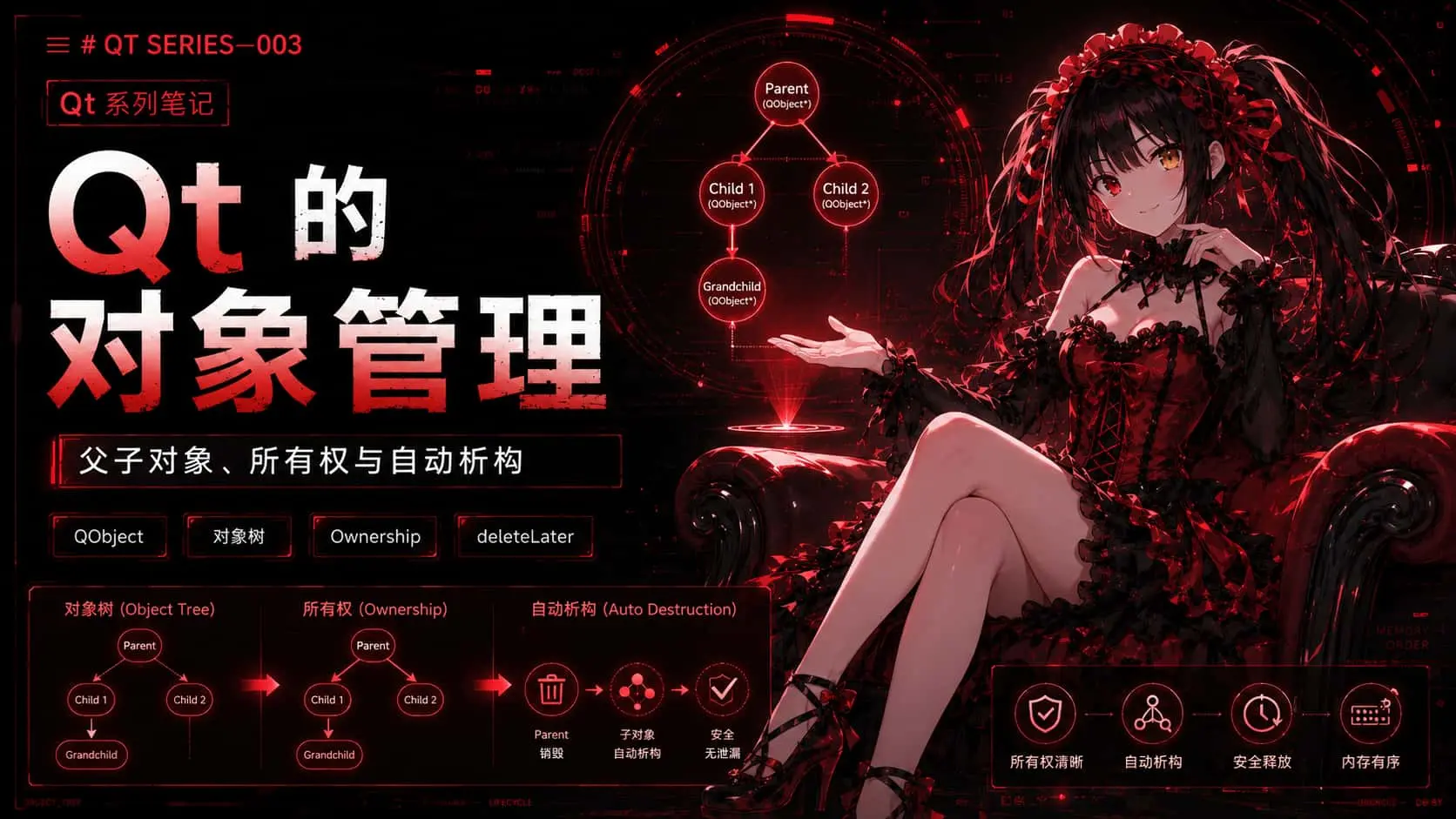
控件都会有一个父对象指针,依附于一个父对象,一旦父对象释放,父对象所有的子对象都会被自动析构,如下图:

当任何一个
QObject(不管是父是子)被销毁(调用析构函数)时,它会自动做两件事:
向下看(作为父对象):
遍历自己的子对象列表(Children List),对里面所有的子对象执行
delete 操作。
向上看(作为子对象): 通过 parent
指针找到自己的父对象,告诉父对象:“我要死了,请把我从你的子对象列表中移除掉。”(如果不做这一步,父对象以后析构时就会
delete 一个野指针导致崩溃)。
所以,无论你是手动 delete
了一个子对象,还是父对象被销毁引发了连锁反应,Qt
的这套机制都能保证内存安全。
在栈上创建对象时,会有释放顺序,如果先释放了父对象,再释放子对象,就会导致子对象多次释放,出错。所以一般会最上层的控件定义在栈上,下面管理的子控件申请在堆上
测试代码
1
2
3
4
5
6
7
8
9
10
11
12
13
14
15
16
17
18
19
20
21
22
23
24
25
26
27
28
29
30
31
32
33
34
35
36
37
38
39
40
41
42
43
44
45
46
47
48
49
50
51
52
53
54
55
56
57
| #include <iostream>
#include <QApplication>
#include <string>
using std::cout;
using std::endl;
class Abinng : public QObject {
Q_OBJECT
public:
explicit Abinng(QObject *parent = nullptr) : QObject(parent) {
cout <<__PRETTY_FUNCTION__ << endl;
}
~Abinng() override {
cout << __PRETTY_FUNCTION__ << endl;
}
};
class AbinngBlog : public QObject {
Q_OBJECT
public:
explicit AbinngBlog(QObject *parent = nullptr) : QObject(parent) {
cout << __PRETTY_FUNCTION__ << endl;
}
~AbinngBlog() override {
cout << __PRETTY_FUNCTION__ << endl;
}
};
void test01() {
QObject root;
Abinng *a1 = new Abinng(&root);
AbinngBlog *ab1 = new AbinngBlog(a1);
}
void badExample() {
QObject child;
QObject parent;
child.setParent(&parent);
}
int main(int argc, char *argv[]) {
QApplication a(argc, argv);
test01();
return 0;
}
|